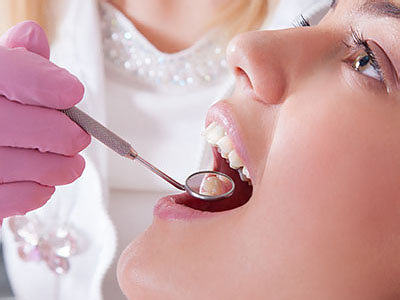
Treating tooth decay early preserves the structure, function, and appearance of your natural tooth. A properly placed filling restores strength to a weakened tooth and prevents decay from spreading to adjacent teeth or deeper into the pulp where more complex treatment may be required. Addressing cavities promptly helps maintain comfortable chewing, avoids unnecessary sensitivity, and reduces the risk of emergency dental visits.
Fillings are one of the most commonly performed restorative procedures because cavities are common across all ages. The goal is straightforward: remove damaged tissue and replace it with a material that restores form and function while respecting the tooth’s remaining healthy structure. Modern techniques let us conserve more of the original tooth compared with older approaches, which means better outcomes and longer-lasting restorations.
In our approach, we prioritize patient comfort and clear communication. At the office of Dr. Ken Kloess, you’ll find that treatment recommendations are based on current evidence, clinical experience, and a careful evaluation of your goals. We explain the reason for treatment, the materials available, and what you can expect during and after the procedure so you can make informed choices about your oral health.
Human beings have attempted to repair damaged teeth for millennia; archaeological finds show early efforts to fill or protect teeth long before modern dentistry existed. Over the centuries, materials and methods evolved from rudimentary packings to precise, laboratory-tested restorations that blend strength and esthetics.
The 19th and 20th centuries introduced metal-based restorations such as gold and dental amalgam, valued for durability. In recent decades, materials science and adhesive dentistry have shifted the focus toward tooth-conserving, tooth-colored options that bond to the remaining tooth and restore a natural appearance. Today’s choices let clinicians balance longevity with cosmetic considerations and tissue health.
Every cavity and every patient is unique. We tailor our recommendations to the size and location of the decay, the patient’s bite and oral habits, aesthetic priorities, and long-term goals for dental health. That personalized plan aims to deliver the best combination of function, comfort, and appearance for each situation.

Material selection plays a central role in how a filling looks and performs. Modern restorative options are designed to meet different clinical needs — some prioritize strength for back teeth, others emphasize a seamless color match for front teeth, and some provide therapeutic benefits such as fluoride release.
Your dental history, the location and extent of the cavity, and personal preferences all influence the best choice for you. We discuss advantages and limitations of each option, focusing on durability, appearance, and the amount of tooth structure that must be removed during preparation.
Below are the most commonly used restorative materials and the characteristics that make each one appropriate in specific situations.
Composite restorations are made from a blend of dental resin and finely milled glass or ceramic fillers and are shaded to blend with surrounding teeth. Because they bond directly to the tooth, composites often preserve more natural tooth structure and provide a pleasing cosmetic result that’s hard to distinguish from the original enamel.
These fillings are ideal for visible areas and for smaller to moderate cavities. They are easy to repair, but like any material, they are subject to wear and staining over time, especially in patients who grind their teeth or consume stain-causing foods and beverages.
Metal restorations have a long history of durability and can be an appropriate choice where maximum strength is required, such as in large restorations on chewing surfaces. They are less aesthetic than tooth-colored materials but remain a practical option for select clinical scenarios.
Glass ionomer materials bond chemically to tooth structure and slowly release fluoride, which can be helpful in patients at higher risk for recurrent decay. They are commonly used for restorations in baby teeth, small restorations near the gumline, or as a protective liner under other filling materials.
Because glass ionomers are generally less wear-resistant, they are often chosen for specific, lower-stress locations or as a temporary or transitional restoration.
Ceramic restorations are fabricated from dental porcelain or other high-strength ceramics in a laboratory or milling center. These indirect restorations provide excellent aesthetics and wear resistance and are a strong option when the damage is too extensive for a simple direct filling but not severe enough to require a crown.
Gold remains one of the most durable and tissue-friendly restorative materials, prized for longevity and reliability. While less commonly chosen for purely cosmetic reasons today, gold inlays and onlays continue to be a high-performing solution when cost and aesthetics are secondary to long-term function.
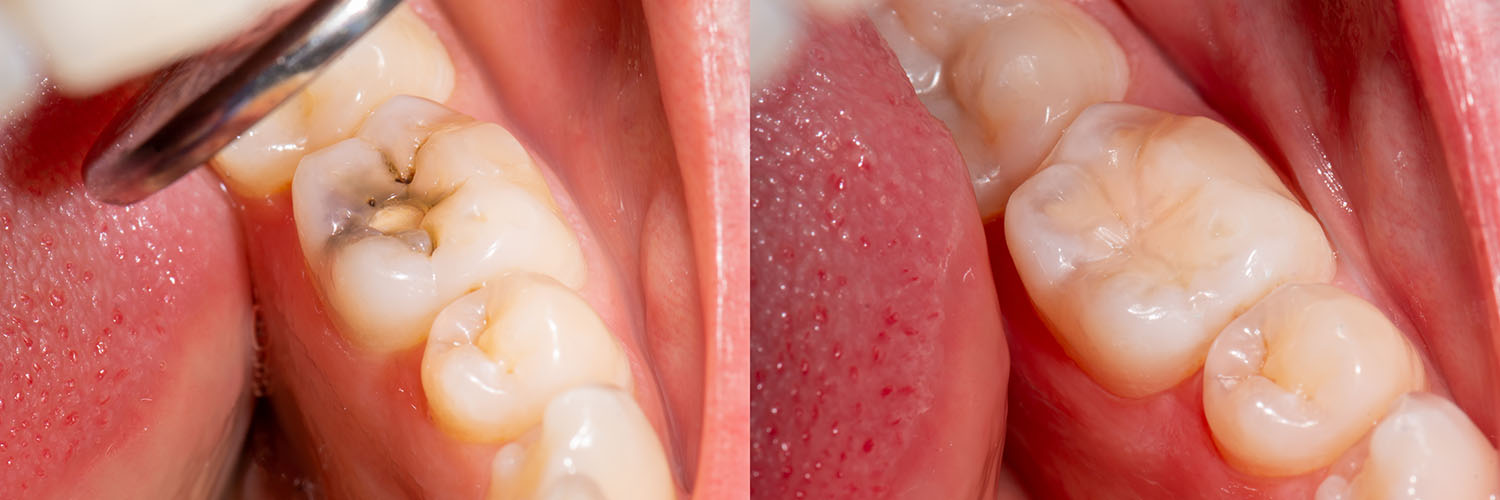
When you come in for a filling, we begin with a careful assessment that includes a clinical exam and, when appropriate, digital images to determine the size and depth of the decay. The treatment plan we present will explain which material we recommend and why, along with an outline of the steps involved so you know exactly what to expect.
>Most filling visits are completed in a single appointment. After delivering local anesthesia to ensure comfort, your clinician gently removes decayed tissue using modern rotary instruments, air abrasion, or laser techniques depending on the situation. Preserving healthy tooth structure while fully eliminating decay is the priority.
Placement techniques vary by material: composites are placed in layers and cured with a specialized light, glass ionomers are placed and set chemically, and indirect restorations such as ceramic inlays are fabricated off-site and cemented in a follow-up visit. Throughout the procedure, we verify the restoration’s fit and adjust the bite to make sure it feels natural.
We understand dental anxiety and aim to make every visit as comfortable as possible. Most patients are treated comfortably with local anesthesia, and we can discuss sedation options for those who prefer additional relaxation during procedures.
Recovery after a standard filling is generally quick, and most patients resume normal activity immediately. However, there are a few short-term considerations to help ensure the restoration settles properly and to minimize discomfort in the hours and days following treatment.
Protect numb tissues: Local anesthesia can linger for an hour or two. Avoid chewing until normal sensation returns to prevent accidentally biting your lips, tongue, or cheeks. Hot foods and beverages should be approached cautiously while numbness persists.
Sensitivity and bite adjustments: Teeth can feel slightly different for a few days after a filling. Temperature sensitivity or a minor awareness of the restored surface is common and usually resolves on its own. If you notice persistent or worsening pain, or if your bite feels uneven, contact us so we can evaluate and make precise adjustments.
Care for the restoration: Composite and ceramic restorations are strong, but like any dental material they benefit from mindful care. Avoid using treated teeth as tools, and be cautious with very hard or sticky foods for the first 24–48 hours. Routine brushing, flossing, and dental checkups will help the restoration last as long as possible.
We welcome questions about your recovery — if anything feels unusual after your appointment, reach out to our team for guidance.
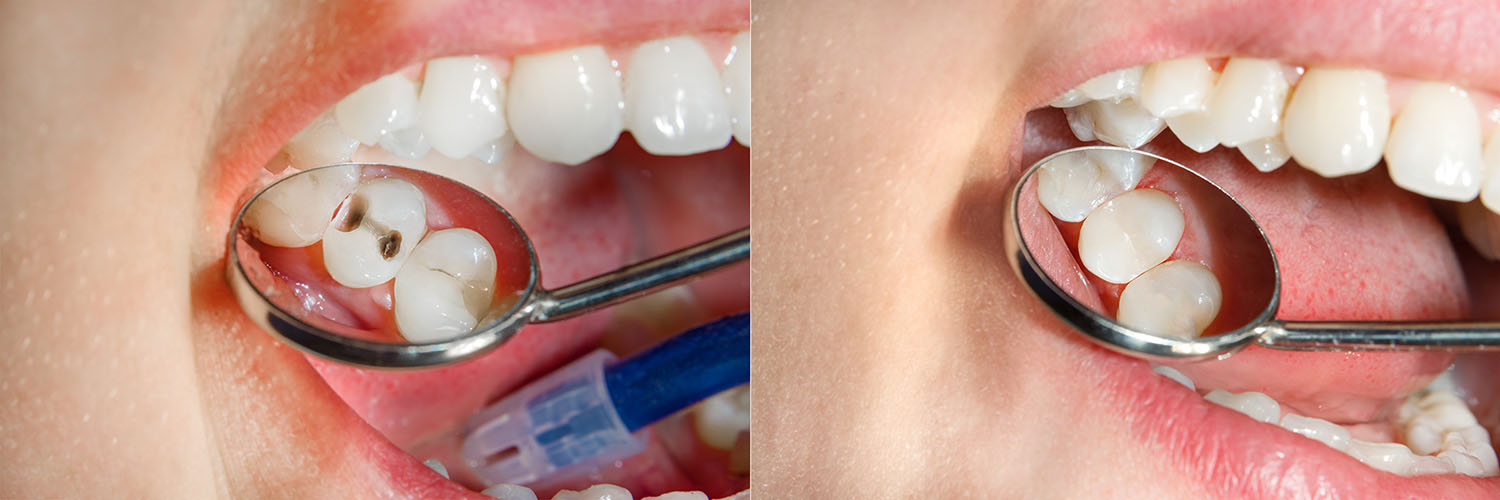
With attentive home care and regular professional checkups, many restorations last for years. Simple preventive habits make a significant difference: daily brushing with fluoride toothpaste, flossing, and routine dental exams and cleanings reduce the likelihood of recurrent decay at the margins of a filling.
Certain factors can shorten a restoration’s life, including heavy grinding or clenching, frequent exposure to acidic or highly staining foods, untreated gum disease, or new decay in nearby teeth. We evaluate these risks during your visits and offer tailored recommendations — such as custom nightguards for bruxism — to help protect your investment in oral health.
When a filling does wear, chip, or allow recurrent decay, replacement or an alternative restoration may be recommended to preserve tooth structure and function. We base those decisions on a combination of clinical findings, digital imaging, and your personal goals for comfort and appearance.
In summary, dental fillings are a reliable and conservative way to restore teeth affected by decay. They protect the tooth from further damage, restore function, and can be matched closely to your natural smile. If you have questions about which option is right for you or want to learn more about our restorative philosophy, please contact us for more information.
A dental filling is a restorative material placed into a tooth after removal of decay to restore its shape, strength, and function. Fillings are necessary when decay has created a cavity that compromises the tooth structure but does not require more extensive treatment such as a root canal or crown. Early intervention with a filling helps prevent the decay from spreading deeper into the tooth or to adjacent teeth. Choosing to repair a tooth promptly also preserves more natural structure and reduces the risk of future complications.
Fillings are commonly used across all ages and can address small to moderate cavities as well as certain chips or minor fractures. The decision to place a filling is based on a clinical exam, radiographic imaging when needed, and an assessment of the tooth’s remaining structure. Other factors such as biting forces, location in the mouth, and aesthetic concerns are also considered. Your dentist will explain why a filling is recommended and which restoration best suits your situation.
Material selection depends on the size and location of the cavity, your bite and chewing habits, aesthetic priorities, and any history of sensitivity or recurrent decay. Common materials include tooth-colored composite resins for visible areas, glass ionomer cements for fluoride release and baby teeth, metal-based restorations for high-strength needs, and ceramic or gold inlays/onlays for larger restorations. Each option has trade-offs between appearance, durability, and the amount of natural tooth that must be removed during preparation. The clinician will review the advantages and limitations of each material so you can make an informed choice.
For smaller, front-facing restorations, composites are often preferred because they bond to the tooth and can be shade-matched for a natural look. In high-stress chewing surfaces, a metal or ceramic restoration may offer superior longevity and wear resistance. Glass ionomer can be useful where fluoride release or chemical bonding to the tooth is desired, particularly in pediatric or low-stress applications. Your care plan will reflect a balance of function, esthetics, and preservation of healthy tooth structure.
Appointments for a routine filling generally begin with a careful clinical examination and any necessary digital images to determine the extent of decay. Local anesthesia is used to ensure comfort, and modern instruments or conservative techniques are employed to remove only the damaged tissue while preserving healthy tooth structure. For direct restorations like composites, the material is placed in layers and stabilized with a curing light; indirect restorations such as ceramic inlays are fabricated off-site and cemented at a follow-up visit. Most patients complete a simple filling in a single visit, with the clinician checking and adjusting the bite before you leave.
We prioritize clear communication about each step so patients know what to expect and can participate in treatment decisions. If you have dental anxiety or strong gag reflexes, we can discuss strategies to increase comfort and reduce stress during the visit. Post-procedure instructions are reviewed before you depart, including guidance on protecting numb tissues and identifying normal versus unusual sensations. If any adjustments are needed afterwards, the practice encourages patients to contact the office for timely follow-up care.
During the procedure, local anesthesia typically prevents pain in the treated area so most patients experience little or no discomfort while the decay is being removed and the restoration placed. Modern techniques and gentle handling further minimize sensation, and dentists monitor patient comfort throughout the visit. For patients with significant anxiety or special needs, additional relaxation options can be discussed to make the experience more comfortable. After the anesthetic wears off, it is common to feel mild sensitivity or tenderness for a short period.
Post-procedure sensitivity to cold, pressure, or sweet foods usually resolves within a few days to a couple of weeks as the tooth adjusts to the new restoration. If sensitivity is persistent, sharp, or accompanied by swelling or severe pain, contact the office so the restoration and surrounding tissues can be evaluated. Adjustments to the bite or further treatment may be required in a small number of cases to restore comfort and function. Good oral hygiene and regular checkups help identify and address concerns early.
Immediately after a filling, protect numb lips, cheeks, and tongue until sensation returns to avoid accidental bites, and be cautious with hot foods and beverages while anesthesia is still active. Avoid using the treated tooth for chewing hard or sticky foods for the first 24 to 48 hours, particularly if a temporary material was used or if a multi-layer composite is still settling. Maintain gentle but thorough oral hygiene around the restoration, using fluoride toothpaste and flossing carefully to prevent irritation to the surrounding gum tissue. Follow any specific instructions provided by your clinician regarding diet, medication, or activity level.
If you experience unusual or worsening pain, prolonged numbness, a persistent odd taste, or if your bite feels uneven, contact the office for an evaluation so adjustments or additional care can be provided. Mild sensitivity and awareness of the restored surface are common and often resolve on their own as the tooth settles. Keeping scheduled follow-up and preventive visits helps the dentist monitor the restoration and catch any early signs of recurrent decay. Prompt communication ensures small issues are treated before they become larger problems.
The lifespan of a filling depends on the material used, the location and size of the restoration, the patient’s oral hygiene, and habits such as clenching, grinding, or using teeth to open packages. Composite and glass ionomer restorations may last many years but can be more susceptible to wear and staining than ceramic or metal restorations in high-stress areas. Ceramic and gold restorations tend to be more durable and resistant to wear, especially for large restorations on chewing surfaces. Regular dental examinations allow the clinician to monitor marginal integrity and surface wear so timely maintenance or replacement can be recommended when needed.
Certain factors accelerate failure, including bruxism, frequent exposure to acidic foods and beverages, untreated gum disease, and poor plaque control leading to recurrent decay at the margins. Wearing a custom nightguard can protect restorations from excessive forces if you grind or clench your teeth. Maintaining daily brushing, flossing, and routine cleanings reduces the risk of secondary decay and helps restorations last as long as possible. When a restoration does fail or recurrent decay is detected, early intervention can preserve more of the natural tooth.
Yes, composite resins are available in multiple shades and translucencies so they can be closely matched to your natural tooth color for a seamless appearance. The dentist selects and layers shades to mimic the optical properties of enamel and dentin, which helps the restoration blend with surrounding teeth. Over time, composites may pick up stains from coffee, tea, red wine, or tobacco, and heavy wear can affect their surface texture and gloss. Regular professional cleanings and good home care help minimize staining and maintain the restoration’s appearance.
Composites are also relatively easy to repair if minor wear or discoloration occurs, which can prolong the life of the restoration without complete replacement. Patients with high staining diets or who smoke should discuss preventive strategies and maintenance with their clinician. In some cases, more stain-resistant materials such as ceramics may be recommended for long-term cosmetic durability in highly visible areas. Your dentist will weigh aesthetic goals against functional needs when recommending a material.
When decay or damage is too extensive for a direct filling but not so severe as to require extraction, an inlay, onlay, or crown can provide a stronger, longer-lasting restoration while conserving as much natural tooth as possible. Inlays and onlays are indirect restorations fabricated in a laboratory or milling center and are bonded to the tooth to replace missing cusp(s) or large portions of the biting surface. Crowns are recommended when the tooth requires full coverage to restore function and protect weakened structure. The choice among these options depends on the amount of remaining tooth, the location of the defect, and the desired balance between strength and conservation.
Indirect restorations often require two appointments: one to prepare the tooth and capture impressions or digital scans, and another to cement the final restoration once fabricated. Ceramics and gold remain popular choices for indirect work because of their strength and wear characteristics. Your dentist will explain why an indirect solution may be preferable and how it compares to a direct filling in terms of longevity, esthetics, and long-term tooth preservation. Treatment planning considers both current needs and anticipated future stresses on the tooth.
Common, usually temporary, issues after a filling include sensitivity to cold, pressure, or sweet foods and a period of adjustment as the tooth adapts to the restoration. Less commonly, a filling may chip, fracture, or develop recurrent decay at its margins, which requires evaluation and repair or replacement. Rare reactions to materials can occur, and allergic responses should be discussed if you have a known sensitivity to dental metals or components. Inadequate removal of decay or an undetected crack can lead to deeper infection that may require more extensive treatment.
Careful diagnosis, appropriate material selection, and precise placement reduce the likelihood of complications, and prompt follow-up is important if symptoms persist or worsen. Regular dental checkups allow the clinician to detect marginal breakdown or early recurrent decay so interventions can be conservative. If you notice unusual pain, swelling, or a persistent bite problem after treatment, contact the office for an assessment. Timely attention to concerns helps protect the tooth and prevent more complex problems.
Treatment recommendations are individualized based on a thorough evaluation of the tooth, radiographic imaging when appropriate, your oral health history, and your personal goals for comfort and appearance. Factors such as the size and location of the decay, your bite dynamics, esthetic priorities, and any parafunctional habits guide material selection and the overall restorative strategy. The team discusses options, expected outcomes, and any short-term care considerations so patients can make well-informed decisions that align with their needs. This collaborative approach ensures that the chosen solution balances conservation of tooth structure with long-term function.
At the office of Dr. Ken Kloess, patient comfort and clear communication are emphasized throughout the process, from diagnosis to follow-up care. Preventive counseling, customized recommendations such as nightguards for bruxism, and a focus on minimally invasive techniques help extend the life of restorations. The practice uses current evidence and clinical experience to guide decisions while respecting each patient’s preferences. If you have questions about how a specific treatment would apply to your situation, the team welcomes a consultation to review personalized options.
If you are looking for a highly trained, experienced dentist in Dupo, you’ve come to the right place. At our practice, you will receive the highest quality care. Our office uses state-of-the-art equipment and cutting-edge technology.