Advances in dental materials and prosthetic techniques have made it possible to replace missing teeth with results that look natural and perform reliably. While dental implants and fixed bridgework are excellent solutions for many patients, removable dentures remain a practical and well-proven option for restoring a complete, healthy smile.
At the office of Dr. Ken Kloess, DMD, we construct dentures using high-quality materials and attention to detail so the final appliance fits comfortably, supports facial contours, and helps you speak and chew with confidence. Our approach balances aesthetics, function, and long-term oral health.
We work closely with each patient to understand their goals and daily needs, then tailor a treatment plan that meets those objectives while protecting remaining oral structures. The result is a denture designed to feel secure, look natural, and integrate into your lifestyle.
Tooth loss affects more than appearance; it can alter how you eat, how you speak, and even the shape of your face over time. When a tooth is missing, neighboring teeth tend to shift toward the gap, which can create bite problems and make cleaning more difficult. These changes increase the risk of additional dental problems.
Without the support of natural teeth, the jawbone can lose density where roots once stimulated bone maintenance. Over months and years this resorption can change facial proportions, leading to a sunken or aged look. A well-designed denture restores tooth position and offers essential support to the lips and cheeks.
Addressing tooth loss proactively helps preserve oral function and overall comfort. Dentures can be an effective way to rebuild chewing ability and speech, as well as to protect the remaining teeth and gum tissue by redistributing biting forces and maintaining proper alignment.
Dentures are removable prosthetic devices that replace missing teeth and the surrounding gum tissue. They are composed of artificial teeth set into a supportive base that reflects the natural color of gums. Modern denture teeth are crafted to mimic the appearance and wear characteristics of natural teeth.
Removable dentures come in different forms to meet different clinical needs: some replace a few missing teeth, while others restore an entire upper or lower arch. Because they are removable, dentures allow for thorough daily cleaning of both the appliance and the oral tissues beneath it, which supports long-term tissue health.
Although fixed options like implants and bridges provide permanent replacements in many cases, dentures offer a versatile solution when those approaches are not appropriate. They are especially useful for restoring full arches, accommodating changing oral conditions, or serving as an interim solution while other treatments are planned.

Selecting the right type of denture begins with an evaluation of the number and condition of remaining teeth, the health of the gums and bone, and the patient’s functional and aesthetic goals. That assessment guides whether a partial, complete, or implant-assisted denture is the best fit.
Partial dentures replace one or several missing teeth while using the remaining healthy teeth for support. They prevent neighboring teeth from drifting and help restore a balanced bite. Partial frameworks can be made from cast metal, flexible resin, or hybrid materials depending on the individual case.
Complete dentures restore all teeth in an arch when sufficient natural teeth are no longer present. Designs and fabrication methods vary to provide the most comfortable fit and most natural appearance for each patient’s anatomy and preferences.
Complete dentures replace every tooth in either the upper or lower jaw, or both. Their success depends on careful planning of the denture base, tooth position, vertical dimension, and occlusion to ensure the prosthesis functions harmoniously with the jaw and facial muscles.
A conventional denture is fabricated after any remaining teeth have been removed and the tissues have healed. This approach allows the jaw and gums to stabilize before the final denture is made, which can lead to a more precise fit once healing is complete.
Immediate Denture
An immediate denture is placed at the time of extraction so the patient does not go without teeth during healing. While convenient, these dentures are often adjusted as tissues remodel; a subsequent re-evaluation helps maintain comfort and fit through post-extraction changes.
Overdenture
An overdenture uses remaining tooth roots or specially placed attachments to increase stability and preserve bone. When roots are retained and fitted with protective attachments, they help maintain jawbone health and provide added support for the denture.
Implant-Supported Dentures
Implant-supported dentures snap or clip onto strategically placed dental implants and offer greater retention and chewing efficiency. This option is particularly beneficial for lower-arch prostheses, where conventional dentures are more likely to move during function.
Partial dentures restore one or several missing teeth while preserving and using the remaining teeth for support and retention. They help reestablish a natural-looking smile and stop unwanted shifting of adjacent teeth, which protects the overall alignment of the arch.
Contemporary partials can be designed to be discreet and comfortable. Precision attachments may be used instead of visible clasps for a more aesthetic result, and materials are chosen to balance durability with lightweight comfort.
Your clinician will explain which partial design best suits your oral condition and your functional goals, taking into account chewing patterns, speech needs, and the health of nearby teeth and tissues.
Our team takes time to assess each case and recommend the denture solution that best restores function and appearance while preserving oral health. We focus on predictable results and long-term satisfaction.
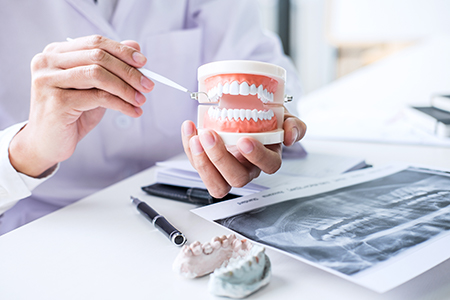
Creating a comfortable, well-fitting denture is a coordinated process that begins with a thorough examination. We review medical and dental history, take precise measurements and impressions, and often use diagnostic imaging to evaluate bone levels and tissue contours.
If necessary, any preparatory treatments such as extractions or minor tissue adjustments are scheduled before final prosthesis fabrication. These steps help ensure that the denture base conforms closely to the healed tissues for better retention and comfort.
Fabrication typically involves try-in appointments where tooth position, bite, and aesthetics are reviewed. Adjustments at these stages allow us to fine-tune the denture for optimal function and appearance before the final prosthesis is completed.
Quality control during each phase — from impressions to final polishing — ensures the denture performs well and integrates with the patient’s daily life. Our goal is a balanced restoration that supports comfortable chewing, clear speech, and a natural smile.

Adjusting to a new denture is a process many patients find straightforward, but it does require patience. In the first days and weeks you may notice increased saliva, minor speech changes, or small sore spots as the mouth adapts. These issues typically resolve with brief adjustments and normal use.
Getting comfortable
Regular wear helps the muscles of the mouth learn to hold and work with the denture. If specific pressure points develop, targeted adjustments can relieve irritation. Follow-up visits are an important part of successful adaptation.
Speaking and eating
Practice helps with both speech and chewing. Begin with soft, manageable foods and cut items into smaller pieces. Speaking aloud and reading passages can accelerate speech adaptation.
Cleaning and daily care
Maintain oral health by cleaning the denture daily and caring for any remaining natural teeth and gums. Rinse the denture after meals and brush it gently with a denture brush. When not in use, store the appliance in water or recommended soaking solution to keep it from warping.
Overnight rest and routine checkups
Removing the denture at night gives tissues a chance to rest and reduces the risk of irritation. Regular dental visits allow us to monitor the fit, perform relines if tissues change, and check the overall health of the mouth.
In some cases, additional retention options such as adhesives or implant attachments can enhance stability. We’ll discuss these possibilities with you and recommend the best approach based on your anatomy and lifestyle.
At the office of Dr. Ken Kloess, DMD, our priority is to help you achieve a comfortable, natural-looking restoration that supports your oral health and quality of life. If you have questions about dentures or would like to explore whether they are right for you, please contact our office for more information.
Dentures are removable prosthetic devices that replace missing teeth and the surrounding gum tissue. They consist of artificial teeth set into a supportive base designed to reflect the natural color and contours of gums. Modern denture teeth are shaped and positioned to restore chewing function and a natural appearance.
Removable dentures fit over the gums and rely on tissue contact, suction, or attachments for retention, allowing patients to remove them for cleaning. They help restore bite relationships and support the lips and cheeks to maintain facial balance. With proper design and fit, dentures can provide reliable function for everyday speech and eating tasks.
Dentures are available in several styles to match clinical needs, including partial, complete (full), and implant-supported designs. Partial dentures replace one or several missing teeth and use the remaining natural teeth for support, while complete dentures restore an entire upper or lower arch. Within these categories there are variations such as immediate dentures, overdentures, and precision partials that use discreet attachments.
Materials and fabrication techniques also vary, with modern acrylics, composite teeth, and metal or flexible frameworks used to balance durability, comfort, and aesthetics. Implant-supported options attach to dental implants for enhanced stability and chewing efficiency. Your clinician will recommend the type that best meets your functional and aesthetic goals.
Creating a well-fitting denture begins with a comprehensive examination that includes a review of medical and dental history, precise impressions, and often diagnostic imaging to assess bone and tissue contours. The laboratory process then uses these records to fabricate trial bases and tooth arrangements that are evaluated at try-in appointments. These try-ins allow adjustments to tooth position, bite, and esthetics before the final prosthesis is processed and polished.
After delivery, initial adjustments fine-tune areas that cause pressure or irritation, and follow-up visits ensure comfortable function. Preparatory treatments such as extractions or tissue smoothing may be scheduled in advance to allow tissues to heal before the final denture is completed. Quality control at every stage helps ensure the prosthesis integrates with your daily life and oral anatomy.
Daily denture care includes rinsing the appliance after meals and brushing it gently with a denture brush and a nonabrasive cleaner to remove food particles and plaque. Avoid using regular toothpaste or stiff brushes that can scratch denture surfaces, and handle the prosthesis over a towel or basin of water to prevent damage if dropped. Also clean your remaining natural teeth, gums, tongue, and palate to maintain oral health beneath the denture.
When not wearing dentures, soak them overnight in water or a manufacturer-recommended soaking solution to prevent warping and to keep them hygienic. Remove dentures at night to give oral tissues a rest and reduce the risk of irritation. Regular professional checkups allow the dental team to assess fit, perform relines or repairs, and monitor tissue health.
Adapting to new dentures varies by individual but commonly takes several weeks as the mouth adjusts to the feel and function of the prosthesis. Early experiences may include increased saliva, minor sore spots, and small speech changes; these are usually temporary and improve as muscles learn new movements. Regular follow-up visits help identify pressure points and allow targeted adjustments that speed adaptation.
Speech and chewing typically improve with practice; begin with soft foods cut into small pieces and gradually reintroduce firmer textures. Reading aloud and practicing difficult sounds can accelerate speech adaptation. If persistent discomfort or functional issues continue, additional adjustments or alternative retention strategies may be recommended.
Properly designed dentures restore support for the lips and cheeks, helping to maintain natural facial contours and reduce a sunken appearance that can follow tooth loss. Tooth position and vertical dimension are planned to harmonize with facial proportions so the prosthesis looks natural and balanced. In many cases this restoration of support contributes to an improved facial profile and smile esthetics.
Speech can be temporarily affected as the lips, tongue, and cheeks adapt to the new shape in the mouth, but most patients regain clear speech with consistent wear and practice. A well-fitting denture minimizes lisping and other speech changes, and adjustments during follow-up care address persistent issues. If speech or appearance concerns persist, refinement of tooth placement or retention method can often resolve them.
Partial dentures replace one or multiple missing teeth and rely on remaining natural teeth or precision attachments for retention, which helps prevent neighboring teeth from shifting. Complete dentures restore all teeth in an upper or lower arch and depend on tissue support, suction, or adhesives for stability. Both types can be fabricated with different materials and design details to balance comfort and esthetics.
Implant-supported dentures attach to dental implants and offer improved retention, chewing efficiency, and reduced movement compared with conventional tissue-supported prostheses. Overdentures that use retained roots or implant attachments also help preserve jawbone and provide enhanced stability. The choice among these options depends on oral health, bone volume, and the patient’s functional priorities.
Deciding whether dentures are appropriate begins with a thorough clinical evaluation of remaining teeth, gum and bone health, medical history, and the patient’s functional and aesthetic goals. Diagnostic records including impressions and imaging help the clinician assess whether conservative tooth replacement, fixed prosthetics, or removable dentures best address the case. The evaluation also considers long-term oral health, the condition of supportive tissues, and the patient’s ability to maintain and care for the prosthesis.
At the office of Dr. Ken Kloess in Dupo, we review all available options and recommend a treatment plan that balances comfort, function, and preservation of oral structures. We discuss the benefits and limitations of each approach and plan follow-up care to monitor tissues and prosthesis performance. This collaborative process ensures a decision that fits the patient’s lifestyle and health needs.
Routine maintenance for dentures includes periodic professional examinations to evaluate fit, occlusion, and the health of the oral tissues, as well as relines or repairs as the jawbone and gums change over time. Tissue changes and normal wear of denture teeth can alter fit and function, so scheduled checkups help preserve comfort and chewing efficiency. Prompt attention to loose, cracked, or sore areas prevents more significant problems and extends the life of the appliance.
In addition to professional care, patients should practice daily hygiene for both the denture and oral tissues and report any persistent discomfort or changes in function. Some cases benefit from additional retention aids such as adhesives or implant attachments, which the clinician can evaluate. Maintaining regular visits ensures the prosthesis continues to support oral health and quality of life.
Yes, dentures can be used with dental implants in several configurations, including implant-supported overdentures and fixed implant-retained prostheses. Implant attachments increase retention and stability, reducing movement during chewing and speech and often improving patient confidence while eating. Implants also help preserve jawbone by providing stimulation similar to natural tooth roots, which can maintain facial structure over time.
The process typically involves placing implants in strategic locations, allowing a period for integration, and then adapting the denture to engage the attachments. Not every patient is a candidate for implants, so a clinical assessment of bone volume and overall health is necessary. When appropriate, combining implants with dentures offers a durable solution that enhances function and long-term oral health.
If you are looking for a highly trained, experienced dentist in Dupo, you’ve come to the right place. At our practice, you will receive the highest quality care. Our office uses state-of-the-art equipment and cutting-edge technology.