Deciding to remove a tooth is never taken lightly. Our focus is on preserving natural teeth whenever possible, but there are circumstances where extraction is the safest path to protect the rest of your mouth. We approach each recommendation with careful evaluation, clear explanation, and attention to your comfort so you can make an informed choice.
Every patient receives a thorough review of their dental and medical history before we consider extraction. That review, combined with a focused clinical exam and imaging as needed, helps us weigh the benefits and risks of removal versus restoration. Our goal is to choose treatments that preserve function and long-term oral health.
Comfort and anxiety management are important parts of the experience. Whether a patient prefers minimal local anesthesia or would benefit from additional dental sedation, we discuss options in advance, outline what to expect, and tailor care to individual needs so the procedure is predictable and as gentle as possible.
Below are some of the most common situations that lead clinicians to recommend extraction. Each item represents a different clinical challenge, and our team explains alternatives whenever viable so you understand why removal may be the most responsible course.
Persistent primary (baby) tooth that blocks normal development
Sometimes a primary tooth does not shed on schedule because its root fails to resorb or it has become fused to the underlying bone. When that happens, the erupting permanent tooth can be displaced or damaged. If observation shows the retained tooth is interfering with growth, we recommend extraction to allow normal eruption and alignment.
Permanent tooth with extensive, non-restorable decay
Decay begins at the enamel and can progress into deeper tooth structure and the nerve if untreated. When a tooth has lost too much healthy structure or has an irreversibly compromised root, restorative options such as fillings or crowns are no longer viable. In those cases, extraction protects surrounding teeth and prevents the spread of infection.
Severe fracture or structural failure
Teeth can fracture in many ways—some cracks are minor and repairable, while others extend below the gum line or into the root. If the break leaves insufficient tooth to restore or has damaged the supporting root beyond predictable repair, removal becomes the necessary treatment.
Advanced periodontal disease compromising support
Gum disease destroys the tissues and bone that hold teeth in place. In advanced cases, teeth loosen as their supporting structures diminish. When periodontitis cannot be controlled around a particular tooth, extraction may be recommended to stop disease progression and protect neighboring teeth.
Impacted or problematic wisdom teeth
Third molars often lack the space to emerge cleanly and can become impacted, decay-prone, or a source of pressure on adjacent teeth. Early removal is commonly advised when wisdom teeth pose a future risk or are already creating symptoms.
Extractions as part of orthodontic planning
In some orthodontic cases, selective removal of one or more teeth helps create space and achieve the best functional and aesthetic outcome. When extractions are part of a coordinated treatment plan, we work closely with the orthodontist to plan timing and long-term restoration goals.

When an extraction is recommended, the process begins with careful planning. We evaluate your overall health, review medications, and take focused images—often digital radiographs—to clarify root shape, surrounding bone, and the proximity of critical structures. That information guides whether a simple or surgical approach is needed.
Honest, clear pre-procedure instructions are part of our standard of care. You will receive guidance about medications, meals, and what to bring the day of treatment. If there are specific medical concerns or a need for a physician’s clearance, we coordinate with your medical team before moving forward.
On the day of the procedure, we prioritize numbing and patient comfort. Local anesthetic is used to eliminate sensation at the site, and we offer dental sedation when appropriate to reduce anxiety and make longer procedures more tolerable. Throughout the appointment we monitor healing factors and explain post-treatment care so you feel confident at every step.
Extractions are commonly grouped into two clinical categories. A simple extraction involves a tooth that is visible and readily accessible, while a surgical extraction is reserved for teeth that are broken, impacted, or otherwise complicated. Both procedures are performed with attention to precision and tissue preservation.
Simple extractions are performed on teeth that are fully erupted and can be grasped securely with forceps. After the area is numb, the dentist gently loosens the ligaments and lifts the tooth from its socket. Because the technique is conservative and commonly performed in-office, recovery is often quick and predictable.
Even with a simple extraction, we aim to minimize trauma to the surrounding bone and soft tissues to preserve options for future restoration. We will review pain control, short-term activity limitations, and signs to watch for during the first 48 hours to ensure your recovery proceeds as expected.
Surgical extractions are indicated when a tooth is impacted, has fractured at or below the gum line, or is fused to the surrounding bone. The procedure may involve making a small incision, removing a bit of bone, or sectioning the tooth to remove it in pieces. This approach allows safe access while protecting neighboring structures.
For these more complex cases, referral to an oral and maxillofacial surgeon is sometimes the best course. Whether performed here or by a specialist, surgical extractions are conducted under careful anesthesia management and with clear post-operative plans to support healing and reduce discomfort.
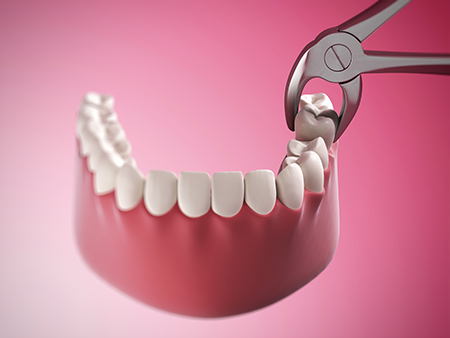
Healing begins immediately, but it unfolds over days to weeks depending on the complexity of the extraction and your overall health. The first 24–72 hours are the most important for clot formation and initial tissue recovery. We provide specific, written aftercare instructions tailored to your case and review them with you before you leave.
While everyone’s healing timeline varies, common recommendations help reduce complications and speed recovery. These include strategies to manage bleeding, ways to reduce swelling, and simple steps for safe pain control. We discuss when to resume normal activities and what foods are easiest to tolerate in the early days.
If sutures are placed or if your extraction was complex, we schedule a follow-up visit to monitor healing and remove any stitches if needed. Keeping that appointment helps us confirm that bone and soft tissues are responding as expected and allows us to plan any subsequent restorative work.
Controlling bleeding
You will be given gauze to bite on immediately after the procedure. Maintain firm but comfortable pressure for the recommended time; replacing the gauze as instructed helps the socket form a stable clot. Light oozing for up to 24 hours can be normal, but heavy bleeding that cannot be controlled should prompt a call to the office.
Protect the numb area
Until sensation returns, avoid chewing or touching the area to prevent accidental biting of the lips, cheeks, or tongue. Take care when eating and speaking until the anesthetic has fully worn off.
Medications and infection prevention
Antibiotics:
If an antibiotic is prescribed, take the full course exactly as directed to reduce the risk of infection.
Pain management:
Start pain medication as recommended so you stay ahead of discomfort. Over-the-counter or prescription options may be suggested depending on the expected level of pain.
Avoid disturbing the clot
Do not rinse vigorously, spit, use a straw, or perform actions that could dislodge the forming clot during the first 24–48 hours. Let any oral fluids fall gently into the sink.
Swelling control
Apply ice to the cheek in short intervals on the first day to minimize swelling. A warm compress after 48 hours can help with residual stiffness if advised.
No smoking
Avoid tobacco products for at least a week after surgery, as smoking interferes with clot stability and delays healing.
Dietary precautions
Start with cool, soft foods and plenty of fluids. Avoid hot, spicy, or carbonated beverages initially and progress to a normal diet as comfort allows.
Oral hygiene
Continue gentle brushing of teeth away from the surgical area and use mild saltwater rinses as recommended to keep the mouth clean without disturbing the site.
Follow-up care
Attend any scheduled post-operative visit so we can assess healing and plan next steps, such as sutures removal or discussions about replacing the missing tooth if appropriate.
If you notice increasing pain, heavy bleeding, worsening swelling, persistent fever, or any other concerning signs, contact our office so we can evaluate and provide prompt care.
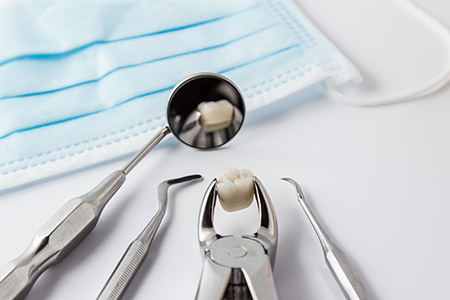
When a tooth is removed, many patients ask about replacement right away. The best choice depends on the location of the tooth, the condition of the mouth, and your long-term goals. We discuss timelines and restorative options so you understand how each path supports function and esthetics.
Common replacement solutions include removable dentures, fixed dental bridges, and dental implants. Each option has advantages: dentures can restore multiple teeth efficiently, fixed bridges replace a gap with a prosthetic attached to neighboring teeth, and implants provide a stable, long-term foundation that closely mimics a natural tooth.
We evaluate bone volume, adjacent teeth, and periodontal health before recommending a solution. In many cases, preserving bone at the time of extraction or planning for grafting can improve outcomes for implant placement later. Our team coordinates restorative planning so that replacement is timed appropriately and integrates smoothly with healing.
At the office of Dr. Ken Kloess, patients benefit from a practice that blends modern techniques with a patient-centered approach. We use up-to-date imaging and gentle clinical methods to minimize discomfort and preserve oral structures whenever possible.
Our team emphasizes clear communication and individual care plans. From the first consultation through recovery and any necessary restorative work, we explain options, address concerns, and deliver care designed to protect long-term oral health and function.
If you are considering an extraction or have been advised that removal may be necessary, we invite you to contact us to learn more about the process and next steps. Our team is available to answer questions and help you choose the treatment pathway that best supports your smile.
Tooth extraction is recommended when a tooth cannot be preserved safely because of extensive decay, severe fracture, advanced periodontal disease, impaction, or a retained primary tooth that blocks normal development. Removing the tooth can prevent the spread of infection and protect neighboring teeth from further damage. Extraction is also sometimes part of orthodontic planning when creating space is necessary for proper alignment.
Before recommending removal, we perform a comprehensive evaluation that includes a review of your dental and medical history, a focused clinical exam, and targeted imaging to assess root shape and bone support. In many cases there are alternatives such as restoration, endodontic therapy, or periodontal treatment, and we explain the risks and benefits so you can make an informed decision. Our priority is to select the option that best preserves long-term function and oral health.
Deciding between extraction and restoration requires weighing the tooth's structural integrity, extent of infection or decay, periodontal support, and the patient's overall health. We examine radiographs to evaluate root condition, bone level, and proximity to critical structures, and we discuss how predictable a restoration would be compared with removal. If a tooth cannot be reliably restored to long-term function, extraction may be the safest choice for overall oral health.
Patient preferences, medical considerations, and future restorative plans also influence the recommendation. We review all viable options and explain the expected outcomes, risks, and timelines so you can participate in the treatment decision. When extraction is advised, we outline subsequent steps for healing and for replacing the missing tooth if appropriate.
A simple extraction is performed on a tooth that is fully erupted and easily accessible, allowing the dentist to loosen and lift the tooth with forceps after local anesthesia. These procedures are commonly done in the dental office and typically cause minimal trauma to surrounding tissues. Recovery from a simple extraction is often quicker and more predictable than for surgical cases.
Surgical extractions are required when a tooth is impacted, broken at or below the gum line, or fused to the surrounding bone, and they may involve making a small incision, removing a bit of bone, or sectioning the tooth for safe removal. Complex cases sometimes require referral to an oral and maxillofacial surgeon for specialized anesthesia and technique. Whether simple or surgical, the approach focuses on protecting adjacent structures and supporting smooth healing.
Local anesthesia is used to numb the area and eliminate sensation at the site of the extraction, and the dentist verifies that you are comfortable before beginning the procedure. For patients who experience dental anxiety or require longer or more complex procedures, additional sedation options are available and discussed in advance. Sedation choices are selected based on medical history, procedure complexity, and patient preference to maintain safety and comfort.
Throughout the appointment the clinical team monitors your comfort and vital signs as appropriate, and we explain what to expect during recovery so you feel prepared. We also provide guidance on pain-control strategies for the first days after the extraction to keep discomfort manageable. Clear communication and individualized care reduce stress and help the visit proceed smoothly.
Your visit begins with a review of medical history, medications, and any special health concerns that could affect treatment. We take targeted images, go over pre-procedure instructions, and confirm whether any physician clearance is needed before proceeding. Please follow guidance about eating, medications, and transportation if sedation is planned so the appointment is safe and predictable.
On the day of the procedure the area will be numbed and you will be kept informed about each step of the process. After the extraction we review post-operative instructions, provide any prescribed medications, and schedule follow-up visits when needed. Knowing what to expect reduces uncertainty and supports a smoother recovery.
Common, generally manageable issues include bleeding, swelling, and post-operative pain, all of which are expected to a degree and addressed with specific aftercare instructions. A dry socket, where the clot is dislodged and exposes bone, can cause increased pain and may require additional treatment to promote comfort and healing. Infection is uncommon when proper care and, if prescribed, antibiotics are used, but it remains a potential complication to watch for.
Less common risks include injury to nearby nerves or sinus communication for upper molar extractions, particularly in complex cases. We minimize these risks through careful imaging, conservative technique, and referral to specialists when appropriate. Prompt follow-up and clear reporting of concerning signs help us address complications quickly and protect long-term outcomes.
Immediately after the procedure bite firmly but comfortably on gauze to help a stable clot form and change it as directed; light oozing for up to 24 hours can be normal but heavy or uncontrolled bleeding warrants contacting the office. Avoid actions that could dislodge the clot during the first 24–48 hours, such as rinsing vigorously, using a straw, spitting forcefully, or smoking. Keeping the surgical area undisturbed is one of the most important steps to prevent complications.
Manage swelling with short intervals of ice on the cheek during the first day and progress to a warm compress after 48 hours if advised. Eat soft, cool foods initially and resume normal brushing while avoiding direct trauma to the extraction site, and follow directions for any prescribed pain medication or antibiotics. Attend your scheduled follow-up so the team can monitor healing and remove sutures if necessary.
The timing for tooth replacement depends on the extraction complexity, bone quality, and your long-term goals; some patients are candidates for immediate replacement while others need to wait for healing and possibly bone grafting. Options include removable dentures, fixed bridges, and dental implants, each with different timelines and requirements. Implant placement often benefits from preserved bone or grafting at the time of extraction to support future stability.
We evaluate bone volume, adjacent teeth, and periodontal health to recommend the most predictable restorative path, and we coordinate timing so restoration integrates smoothly with healing. Discussing replacement early in planning allows us to preserve options and create a restorative schedule that meets functional and aesthetic needs. In-office planning in Dupo helps ensure continuity between surgical and restorative phases.
When a tooth is removed, neighboring teeth can shift or tilt into the space over time, which may change how your teeth fit together and affect chewing and aesthetics. The degree of change depends on the tooth's position, whether multiple teeth are missing, and how long the gap remains unfilled. Early discussion of replacement options helps prevent unintended movement and preserve occlusion.
In cases where tooth removal is part of orthodontic treatment, the extraction is planned to achieve the desired alignment and bite. Preserving bone and considering timely restorative work reduce the likelihood of adverse changes to neighboring teeth. Your dentist will explain how extraction fits into your overall treatment plan and the measures used to maintain proper function.
Extractions can be safe and necessary for children when a primary tooth is retained and blocks normal eruption of a permanent tooth, or when a primary tooth is severely decayed or infected. Treatment decisions take into account growth, tooth development, and future eruption patterns to avoid disrupting permanent teeth. We aim to preserve natural teeth when possible but recommend removal when it protects long-term oral health and development.
Managing fear and cooperation in pediatric patients is an important part of care, and the team tailors anesthesia and behavior strategies accordingly. For complex pediatric cases or when sedation is needed, we discuss options that prioritize safety and a positive experience. Coordination with parents and, when appropriate, orthodontists ensures extractions support healthy growth and future dental needs.
If you are looking for a highly trained, experienced dentist in Dupo, you’ve come to the right place. At our practice, you will receive the highest quality care. Our office uses state-of-the-art equipment and cutting-edge technology.