Tooth loss affects people at every stage of life and can come from a variety of causes — decay, periodontal disease, injury, or other health factors. National data show millions of Americans live with at least one missing tooth, and many more face the prospect of losing additional teeth over time. Missing teeth do more than create gaps in your smile: they can change how you chew, speak, and how your facial features are supported.
Fortunately, modern implant dentistry offers predictable ways to rebuild function and aesthetics. Implants are designed to restore the foundations of a tooth, not just the visible crown, which is why they can deliver durable results that mimic natural teeth in both form and function. For patients exploring long-term solutions, implant treatment is often the option that best balances strength, appearance, and comfort.
At the office of Dr. Ken Kloess, our approach begins with careful assessment and clear communication. We tailor each treatment plan to a patient’s health history, oral anatomy, and lifestyle goals so that replacing a missing tooth becomes a well-planned coordination of surgical skill and restorative craftsmanship.

Dental implants are engineered to integrate with the jawbone, which gives them a level of stability that removable appliances cannot match. Because they act like a tooth root, implants support chewing forces and preserve the surrounding bone by transmitting functional load. That effect slows or prevents the bone loss that typically follows tooth loss, which helps maintain facial contours and overall oral health.
Compared with conventional bridges or removable dentures, implants frequently require less ongoing maintenance and offer a more natural feel. They eliminate the need to modify adjacent healthy teeth in many cases, preserving the integrity of your smile. For denture wearers, implants can anchor prostheses to prevent movement and improve comfort — transforming daily activities like eating and speaking.
Decades of clinical research support the long-term success of implants when placed and maintained properly. The result is a restorative option that restores not only appearance but also function, so patients can enjoy a confident, unrestricted lifestyle.
A dental implant is a specially designed, biocompatible post surgically placed into the jaw. Once the implant integrates with the bone — a process called osseointegration — it serves as a stable base for a crown, bridge, or denture. The restorative portion (the visible tooth or teeth) is designed to match your bite, color, and shape so the result looks natural and feels comfortable.
The implant itself is typically made from titanium or a titanium alloy, chosen for its proven track record of bonding with bone. After placement and healing, the restorative crown or prosthesis is attached using an abutment that connects to the implant. This two-part system replicates the mechanics of a natural tooth, allowing for normal chewing and speech patterns.
Successful implant treatment relies on coordinated planning between surgical placement and restorative design. Our team emphasizes careful imaging and guided planning so implants are positioned to offer the best functional and aesthetic outcomes for each patient.
Beyond the obvious cosmetic improvement, implants provide several practical advantages that affect daily life. Patients often notice greater chewing efficiency, clearer speech, and improved comfort compared with removable options. Because implants are fixed or securely attached, they remove much of the worry about slippage or the need for adhesives.
Implants also contribute to oral health by preserving bone and adjacent teeth. When a tooth is missing, neighboring teeth can drift, creating bite changes and hard-to-reverse wear patterns. Restoring the tooth with an implant helps maintain proper tooth alignment and bite relationships, which supports long-term dental health.
The long-term nature of implants makes them a sustainable choice for many patients. With regular dental care and good home hygiene, implants can remain a dependable part of your oral health plan for many years.
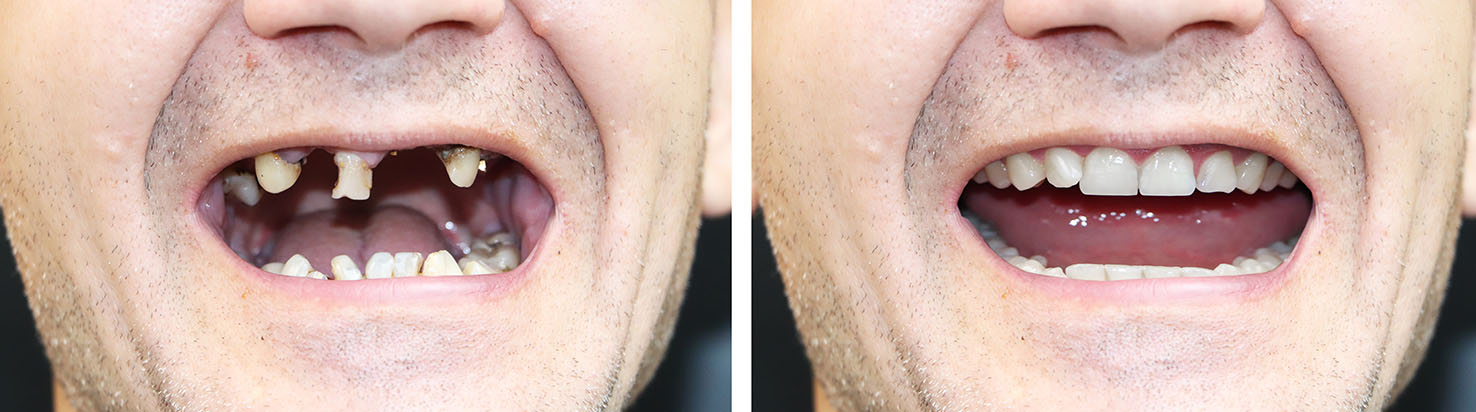
Determining candidacy for implants involves a careful review of overall health, oral conditions, and expectations. Good candidates typically have healthy gums, adequate bone volume or the willingness to undergo preparatory grafting, and a commitment to oral hygiene. Certain medical conditions or habits can influence planning and timing, which is why a thorough evaluation is essential.
We use modern imaging and diagnostic tools to assess bone height, density, and the anatomical structures around the planned implant site. This level of diagnostic detail helps avoid surprises during treatment and allows us to present options that align with your clinical needs and personal goals.
Even if initial conditions are not ideal, there are many pathways to achieve a successful outcome. Bone augmentation, sinus lifts, or staged approaches expand opportunities for patients who previously wouldn’t have been good candidates.
Implant therapy begins with a comprehensive plan that coordinates surgery and restoration. During the planning phase we review imaging, discuss anesthesia or sedation options, and outline the sequence of steps so patients know what to expect. Clear communication is a priority — patients receive instructions for pre- and post-operative care and have the opportunity to ask questions at every stage.
Surgical placement of an implant is typically performed on an outpatient basis and is considered a routine oral surgical procedure. The complexity depends on the number of implants and whether additional procedures like grafting are required. After placement, most patients experience a predictable healing period while the implant integrates with the bone before the final restoration is attached.
Some restorations allow for provisional teeth on the same day as placement, while others follow a staged timeline to ensure optimal healing and long-term success. Throughout treatment, our team focuses on comfort, safety, and achieving a natural-looking end result.
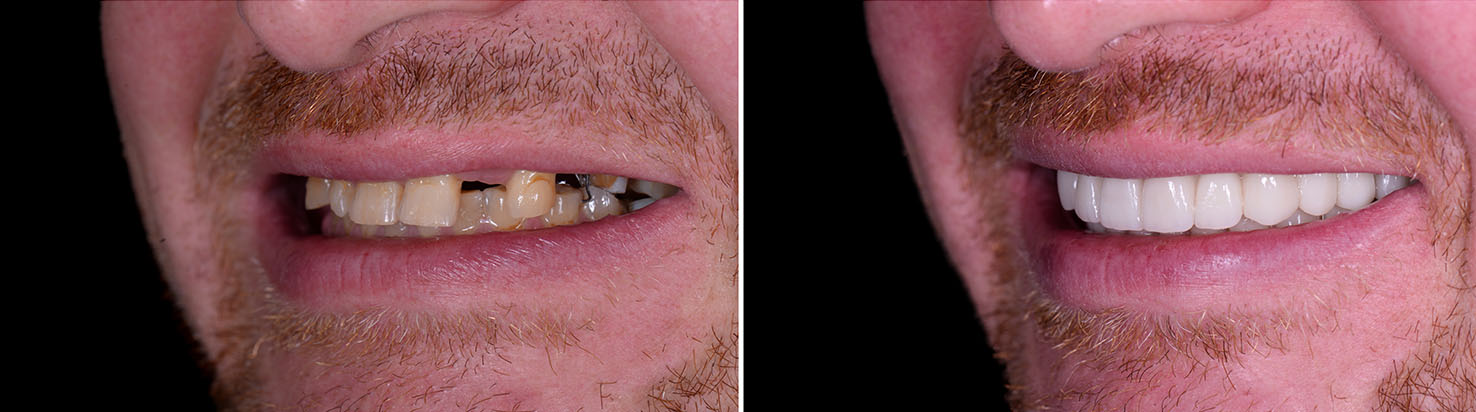
Bone loss commonly follows tooth extraction or long-term tooth absence, and adequate bone volume is an important factor for implant stability. When bone is insufficient, grafting techniques can rebuild the underlying support so an implant can be placed predictably. Grafting materials and techniques vary, and your clinician will recommend a plan based on the amount and location of needed support.
Bone grafting can be performed at the time of extraction, as a preparatory step before implant placement, or in conjunction with the implant surgery itself. Advances in materials and methods have improved healing and integration, making grafting a reliable part of many implant treatment paths.
Replacing missing teeth is about more than filling spaces — it’s about restoring the balance of function, comfort, and appearance that supports long-term oral health. Implant dentistry provides a versatile set of solutions that can be adapted to meet the needs of individual patients, whether the goal is a single tooth, several teeth, or a complete arch.
Our practice combines surgical skill, restorative expertise, and modern diagnostics to deliver treatments planned for durability and aesthetic harmony. If you’re considering implant therapy, we’ll review your options, discuss the sequence of care, and outline realistic expectations so you can make an informed decision.
To learn more about implant dentistry and how it could help you regain a confident, functional smile, please contact our office for additional information or to schedule an evaluation.
Dental implants are biocompatible posts surgically placed into the jaw to replace missing tooth roots and provide a stable foundation for crowns, bridges, or dentures. Once placed, implants undergo osseointegration, a natural process in which the bone bonds to the implant surface and creates long-term stability. The restorative portion attached to the implant is designed to match your bite, color, and shape so the final result looks and functions like a natural tooth.
The implant system typically consists of the implant fixture, an abutment, and a final prosthesis. Materials such as titanium are commonly used for their proven ability to integrate with bone and support chewing forces. Careful surgical placement and restorative design are coordinated to recreate both the mechanical and aesthetic aspects of a natural tooth.
Good candidates generally have healthy gum tissue, adequate bone volume, and a commitment to daily oral hygiene and regular dental visits. Medical conditions, smoking, or uncontrolled chronic illnesses can influence treatment planning and timing, so a thorough medical and dental history is essential. Age alone is not a limiting factor; candidacy depends on oral health, bone support, and patient expectations.
Modern imaging and diagnostic tools allow clinicians to evaluate bone height, density, and anatomical structures that affect implant placement. When bone is insufficient, procedures such as bone grafting or sinus augmentation can expand candidacy for many patients. The decision to proceed is individualized and balances clinical findings with the patient’s goals and general health.
The timeline for implant therapy varies with the complexity of the case, starting with an initial consultation, diagnostic imaging, and treatment planning. Surgical placement of the implant is often performed on an outpatient basis, after which a healing period is required for osseointegration; this phase commonly lasts several months but can be shorter or longer depending on bone quality. In some cases, a provisional restoration may be placed the same day, while other situations follow a staged approach to protect healing tissues.
After the implant has integrated, the restorative phase begins with placing an abutment and custom crown, bridge, or denture. Multiple follow-up visits ensure proper fit, occlusion, and aesthetics before finalizing the restoration. The overall process is designed to prioritize predictable integration and long-term function rather than speed alone.
Implant restorations are customized to address the number and location of missing teeth and can include single-tooth crowns, implant-supported bridges, full-arch fixed restorations, and implant-retained overdentures. Single implants replace one tooth without altering neighboring teeth, while implant-supported bridges use implants to carry the load across multiple missing teeth. Full-arch solutions and hybrid prostheses can restore an entire upper or lower arch with a small number of strategically placed implants.
For patients who prefer a removable prosthesis, implant-retained overdentures use attachment systems to secure the denture while still allowing removal for cleaning. The selection of restoration is based on functional needs, aesthetic goals, and the clinical conditions present in the mouth. Each option is planned to optimize chewing efficiency, speech, and ease of maintenance.
Bone grafting is considered when the jaw lacks sufficient volume or density to support an implant securely, which can occur after tooth loss or following long-term bone resorption. Grafting rebuilds the underlying support using a variety of materials, including the patient’s own bone, donor bone, or synthetic grafting materials that encourage new bone growth. The goal is to create a stable foundation so the implant can integrate predictably.
Grafting can be performed at the time of tooth extraction, as a preparatory procedure before implant placement, or simultaneously with implant surgery depending on clinical needs. The choice of technique and timing is guided by imaging findings and the amount of augmentation required. Advances in grafting materials and methods have improved healing outcomes and expanded treatment options for patients with prior bone loss.
Implant surgery is typically an outpatient procedure performed with local anesthesia and, when appropriate, sedation options to enhance comfort. The surgical visit may involve placing one or more implants and, when needed, concurrent grafting procedures; the length and complexity depend on the individual case. Patients commonly experience mild swelling, bruising, and discomfort for a few days, which are manageable with rest and post-operative care instructions.
Initial healing focuses on soft tissue recovery while the implant integrates with the bone over the following weeks to months. During this period, patients are advised to follow dietary recommendations and oral hygiene practices provided by the dental team to support healing. Routine post-operative appointments allow the clinician to monitor integration and determine when it is appropriate to proceed with the restorative phase.
Maintaining dental implants requires the same diligent oral hygiene used for natural teeth, including twice-daily brushing, daily interdental cleaning, and regular professional cleanings. Although implant fixtures are not susceptible to tooth decay, surrounding tissues can develop peri-implant inflammation or infection if plaque control is neglected. Regular dental examinations allow early detection and management of any soft tissue concerns around implants.
Patients with habits such as heavy grinding or clenching may benefit from protective measures like a night guard to reduce excess forces on implant restorations. Professional maintenance intervals are tailored to each patient’s needs and may include more frequent recall visits for those with a history of periodontal disease. Consistent home care and scheduled dental visits are the cornerstone of preserving implant health and function.
Dental implants are a well-established and predictable treatment when placed with appropriate planning and by trained clinicians, but no procedure is without potential risks. Possible complications include infection, failure of osseointegration, injury to adjacent nerves or anatomical structures, and sinus issues for upper jaw placements. The likelihood of these events is reduced through careful diagnostic imaging, surgical technique, and adherence to post-operative instructions.
Patients are evaluated for medical conditions and habits that may affect healing, and individualized measures are taken to mitigate risk. Early recognition of warning signs such as persistent pain, swelling, or changes in sensation allows prompt management. Open communication with the dental team and adherence to follow-up care contribute to safe, successful outcomes.
Compared with conventional bridges, implants often preserve adjacent healthy teeth because they do not require alteration of neighboring tooth structure to support a replacement. Implants also help maintain jawbone volume by transmitting functional load to the bone, which can preserve facial contours over time. Removable dentures remain a viable option for some patients, but implants provide greater stability and often improved chewing efficiency and comfort.
Implant-supported restorations typically demand regular maintenance similar to natural teeth but can offer a more natural feel and function than removable prostheses. For patients who prefer removable solutions, implant-retained overdentures combine improved retention with the ability to remove the prosthesis for hygiene. The optimal choice depends on clinical findings, daily functional needs, and long-term oral health considerations.
A personalized plan begins with a comprehensive clinical exam, diagnostic imaging, and a review of your medical and dental history to assess bone anatomy, gum health, and any factors that might influence treatment. The care team discusses restorative goals, expected timelines, and any preparatory procedures such as extractions or grafting that may be required. Modern planning often uses 3-D imaging and guided surgical techniques to improve precision and predictability.
At the office of Dr. Ken Kloess, surgical planning and restorative design are coordinated so implant position, prosthetic form, and occlusion are aligned for optimal function and aesthetics. The treatment pathway may be staged or condensed based on clinical needs, with clear communication about each step and what to expect during healing. This collaborative approach helps patients make informed decisions and supports durable, natural-looking results.
If you are looking for a highly trained, experienced dentist in Dupo, you’ve come to the right place. At our practice, you will receive the highest quality care. Our office uses state-of-the-art equipment and cutting-edge technology.